Maximum Experimental Safe Gap (MESG) and Classification into Explosion Groups
Determination of the Maximum Experimental Safe Gap (MESG) and Classification into Explosion Groups
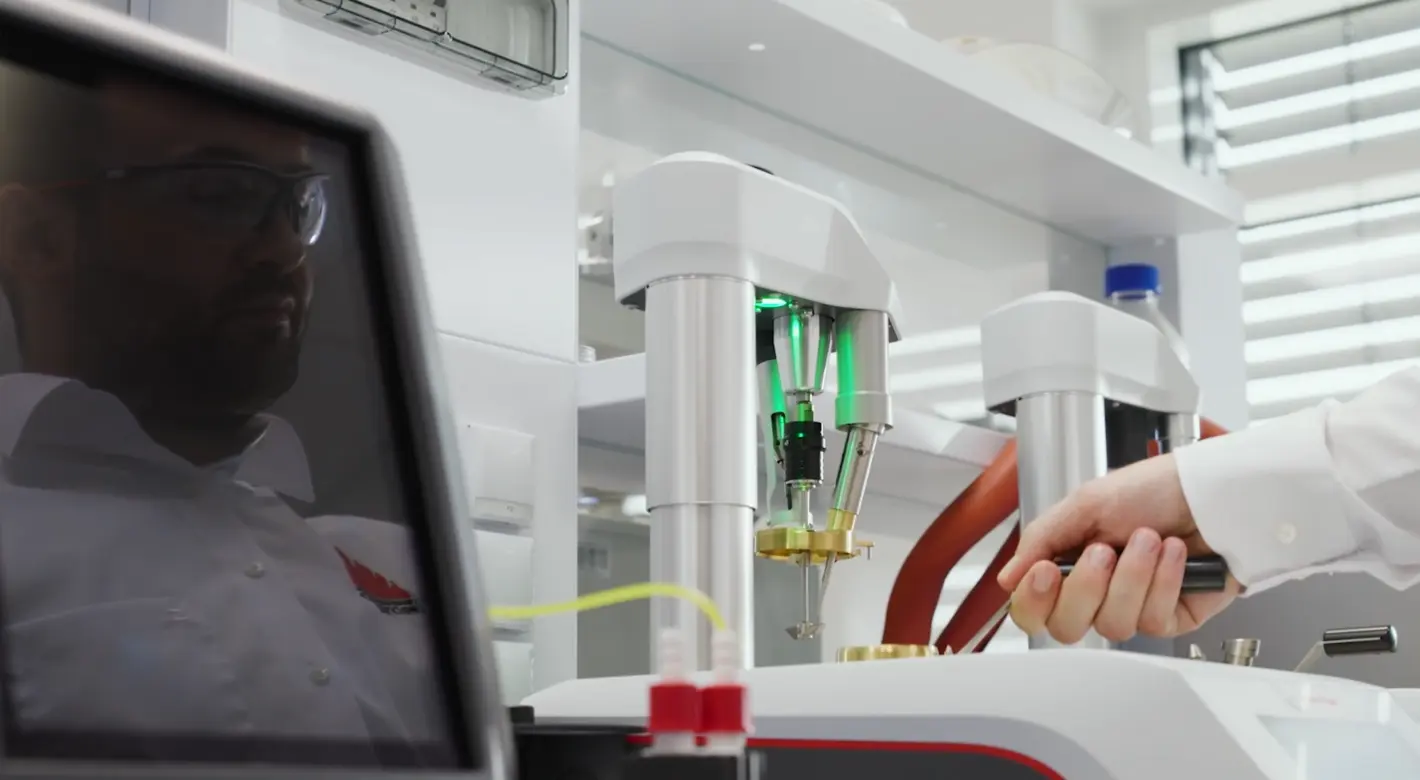
To assess the flame-propagating capability of a substance, its MESG is determined in accordance with ISO/IEC 80079-20-1 using an MESG test apparatus (Fig. 1). Based on the experimental results, the substance is then classified into one of the explosion Explosion Abrupt oxidation or decomposition reaction producing an increase in temperature, pressure, or in both simultaneously. groups IIA1, IIA, IIB1, IIB2, IIB3, IIB, or IIC. The explosion Explosion Abrupt oxidation or decomposition reaction producing an increase in temperature, pressure, or in both simultaneously. group of a substance is used to evaluate the suitability of flame arresters or other ATEX-compliant equipment Equipment Machines, appliances, fixed or mobile devices, control parts and accessories, and warning and prevention systems, whether separate or combined, intended for the generation, transfer, storage, measurement, control, and conversion of energy, and for the processing of materials, which have their own potential source of ignition and may cause an explosion. for the given substance.

The core of the measuring apparatus is an adjustable, concentric annular gap that separates an inner volume from an outer volume. To determine the MESG of a substance,
it is fed into the apparatus in gaseous form and ignited in the inner volume by a high-voltage discharge. If the set gap width exceeds the MESG, the flame propagates into the outer volume, which can be detected visually. To determine the MESG, the fuel concentration must also be varied, as the MESG depends on this concentration. The corresponding curve typically has a parabolic shape with a minimum near the stoichiometric composition (λ ≈ 1; Fig. 2).
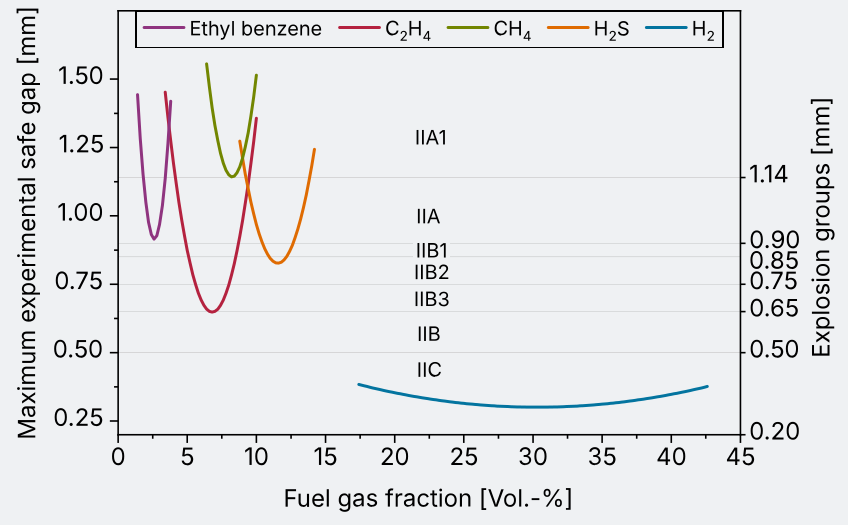
As with other safety-related parameters, the determined value depends on the ambient conditions, particularly the influences of temperature, pressure Pressure (gauge pressure) Pressure for which the value is equal to the algebraic difference between the absolute pressure and the atmospheric pressure. , and oxidizing agents.
In general, the MESG is determined at atmospheric pressure and room temperature. When testing vapors of liquids, the apparatus is heated to prevent condensation,
taking into account the mole fraction of the substance and the vapor-pressure curve.
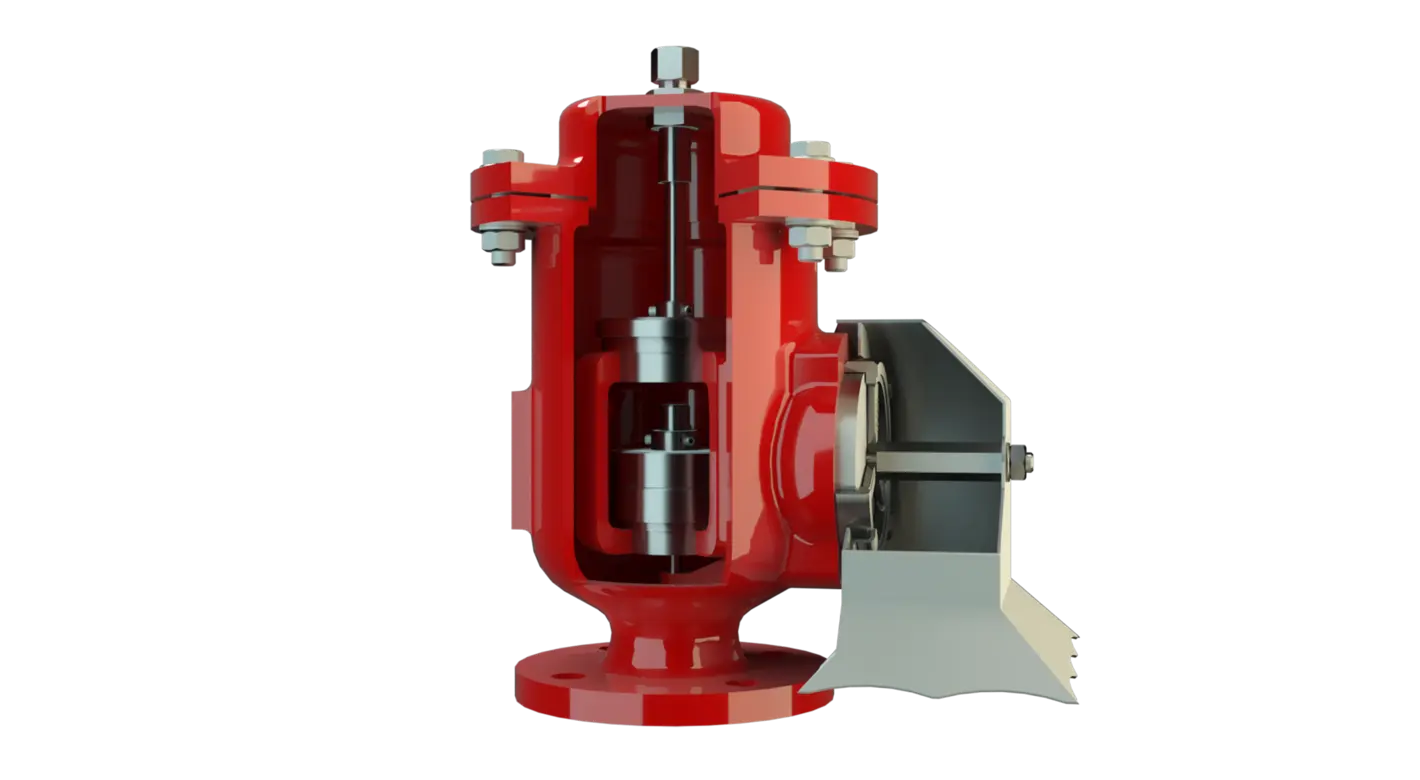
In addition to the measurement conditions, the distinction between substance classification and device design must be considered. A common misconception when using the MESG is the assumption that the determined MESG corresponds to the maximum permissible gap width of a
flame arrester
Flame arrester
Device fitted to the opening of an enclosure, or to the connecting pipe work of a system of enclosures, and whose intended function is to allow flow but prevent the transmission of a flame.
element. However, the gap widths used in a device are always derived from full-scale
explosion
Explosion
Abrupt oxidation or decomposition reaction producing an increase in temperature, pressure, or in both simultaneously.
tests with a reference gas for the respective
explosion
Explosion
Abrupt oxidation or decomposition reaction producing an increase in temperature, pressure, or in both simultaneously.
group, in accordance with ISO/IEC 80079-49 or I SO 16852. This is because a given substance exhibits different flame propagation characteristics
depending on the combustion mechanism (
deflagration
Deflagration
Explosion propagating at subsonic velocity.
or stable/
unstable detonation
Unstable detonation
Detonation during the transition of a combustion process from a deflagration into a stable detonation. The transition occurs in a limited spatial zone where the velocity of the combustion wave is not constant and where the explosion pressure is significantly higher than in a stable detonation.
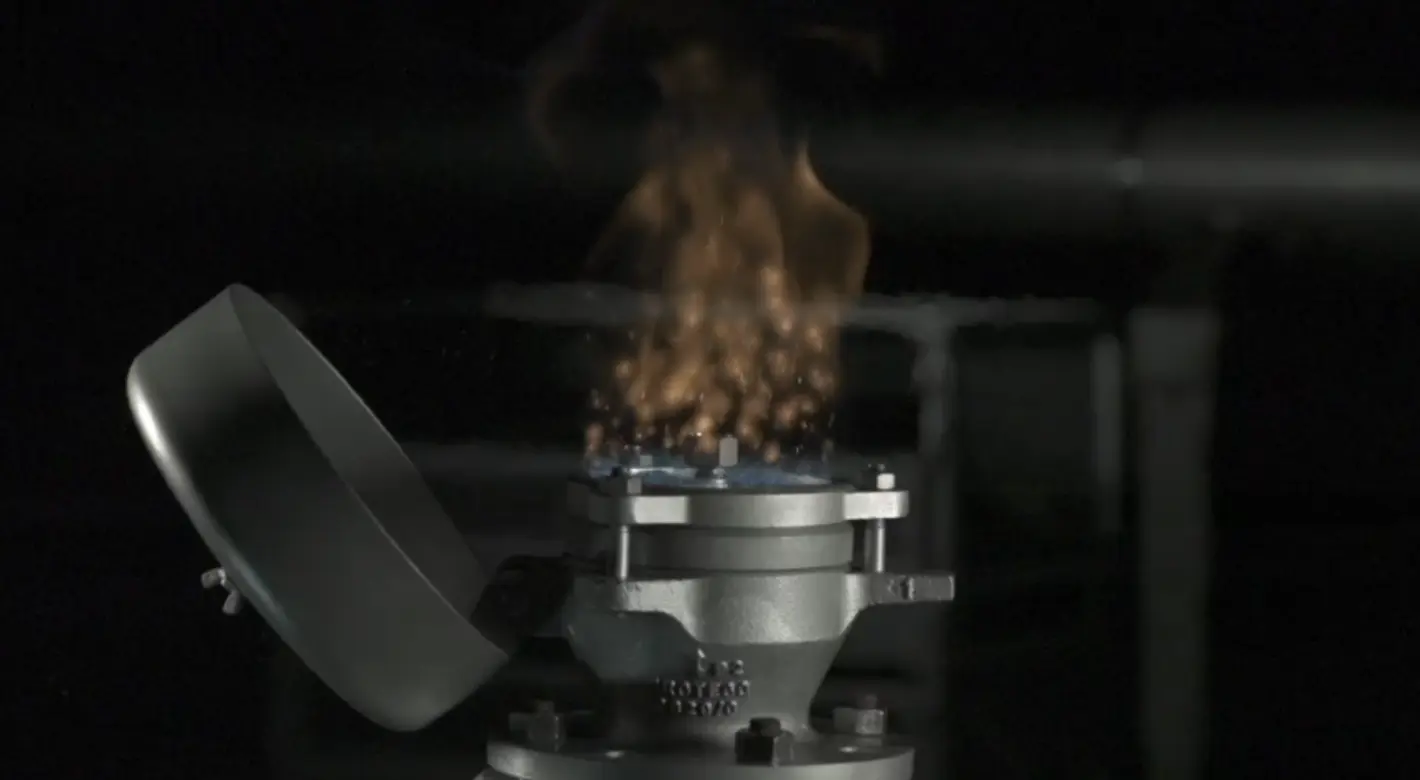
) and the surrounding system (atmospheric or confined). Consequently, the gap widths of the flame arrester element must be adjusted based on these experimental results.